
Information Visualization: Speciation in ActionAudience: Scientific audience with an understanding
or interest in ecology and evolutionary biology
Client: Professor Jodie Jenkinson
Format: Digital Infographic
Tools used: Adobe Illustrator, Adobe InDesign, RawGraphs
Completed: March 2026
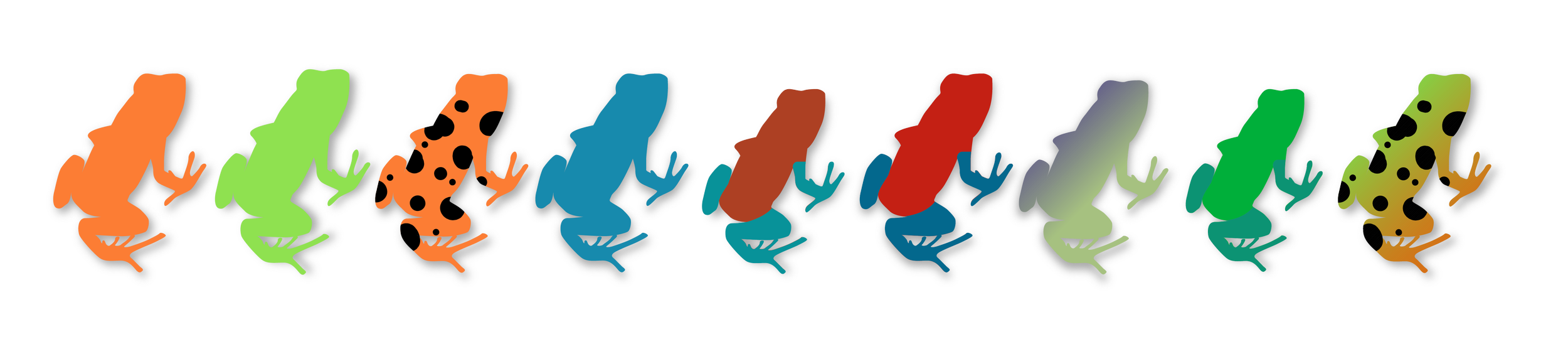
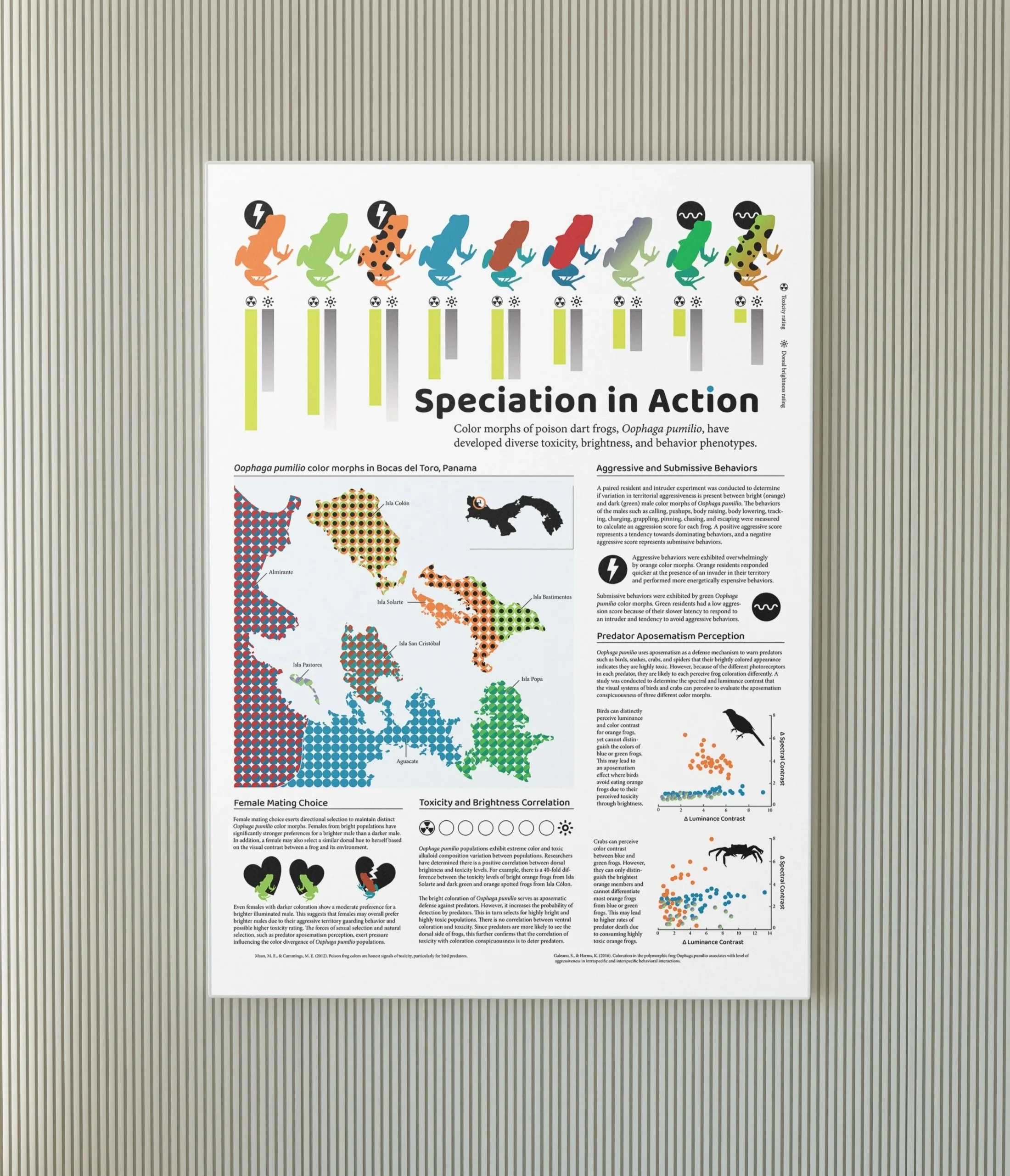
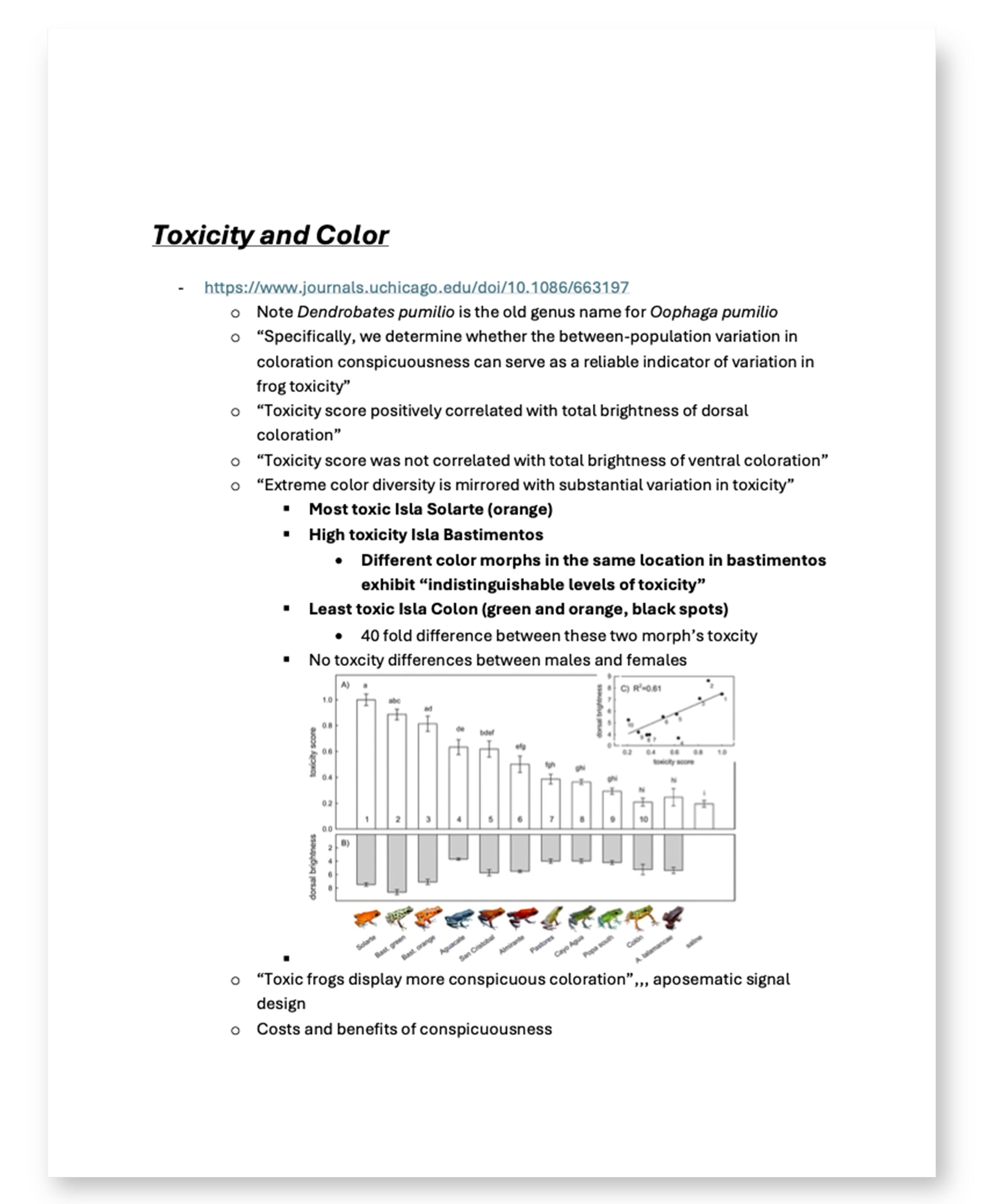
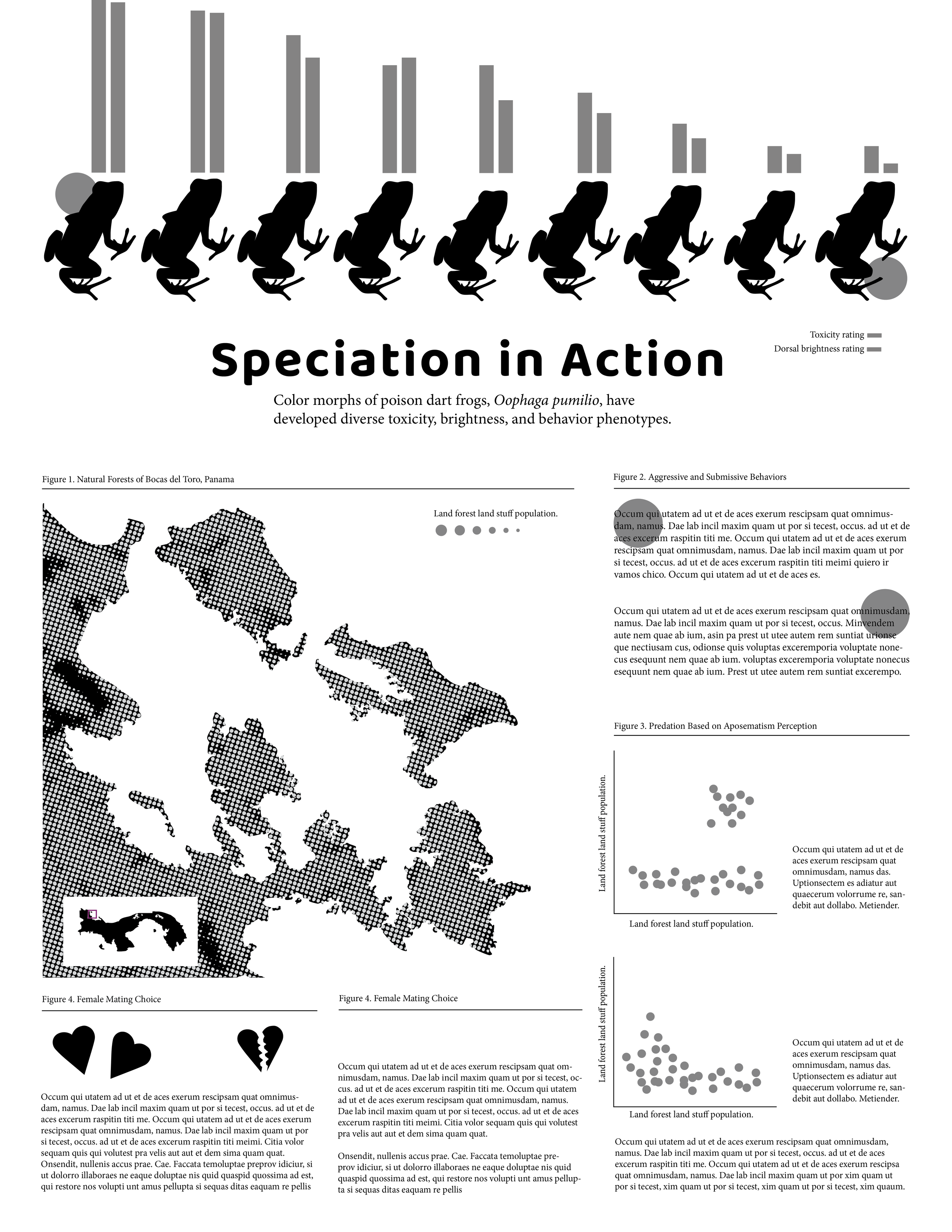
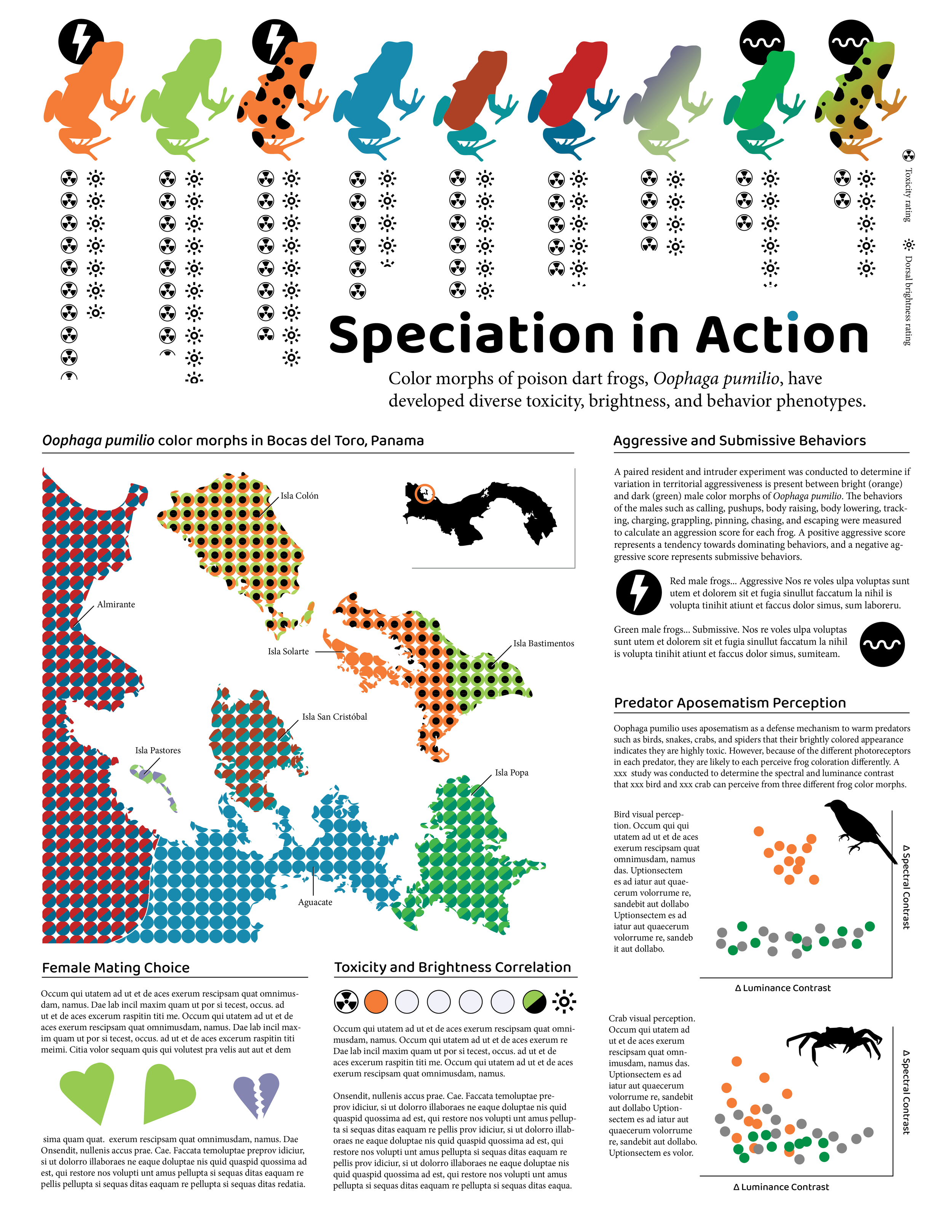
This infographic presents a wide range of scientific research about Oophaga pumilio, the poison dart frog located in Bocas Del Toro, Panama. The audience is introduced to many characteristics about the poison dart frog color morphs such as their habitat location, toxicity level, dorsal brightness level, as well as aggression and submission behaviors. Further correlations are explored between how different color morphs may impact predator aposematism perception and mating choice, leading to speciation of the color morphs. This work aims to promote many research avenues about poison dart frogs and highlight how unique this species is.
References
1a. Scientific Literature Research
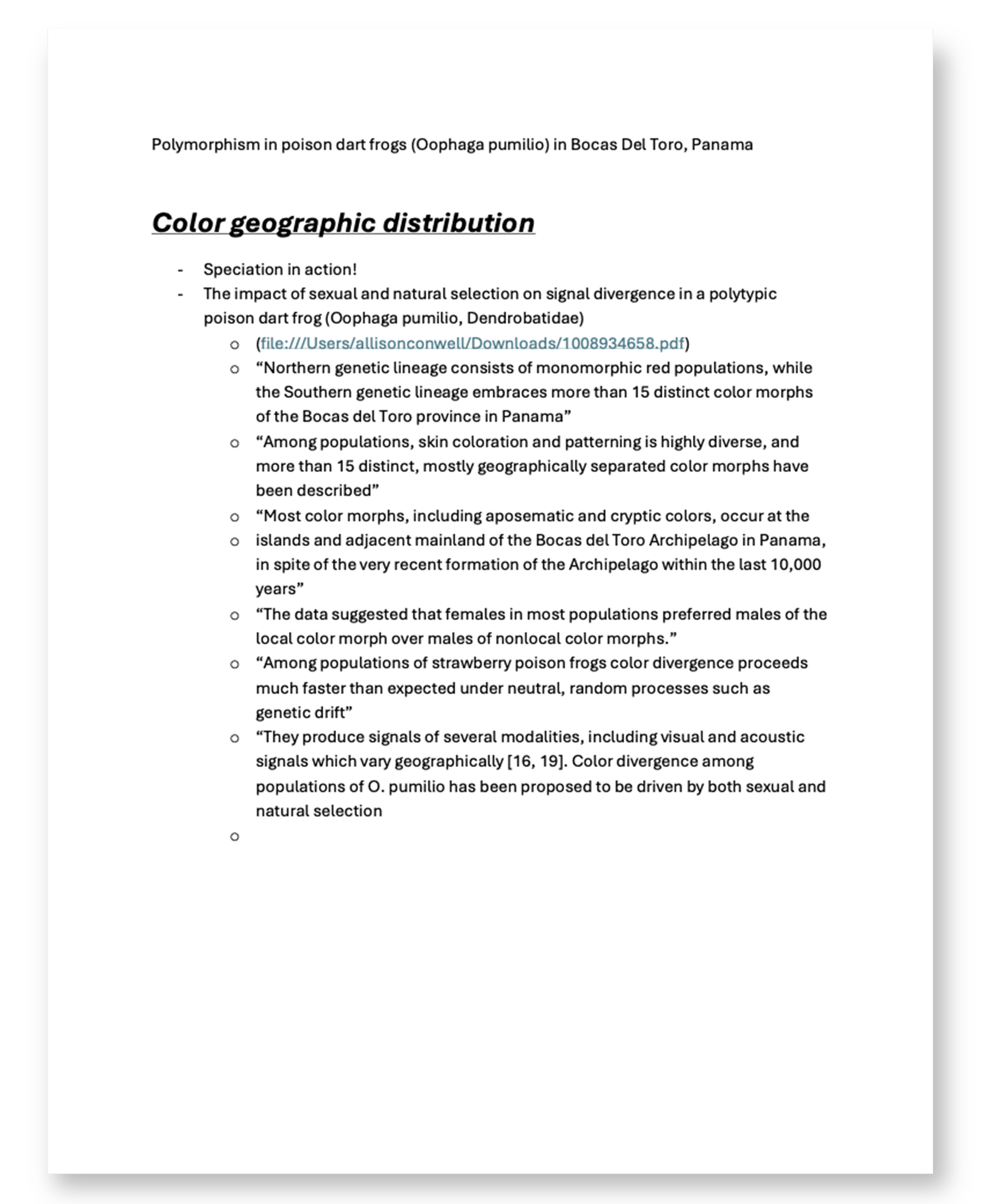
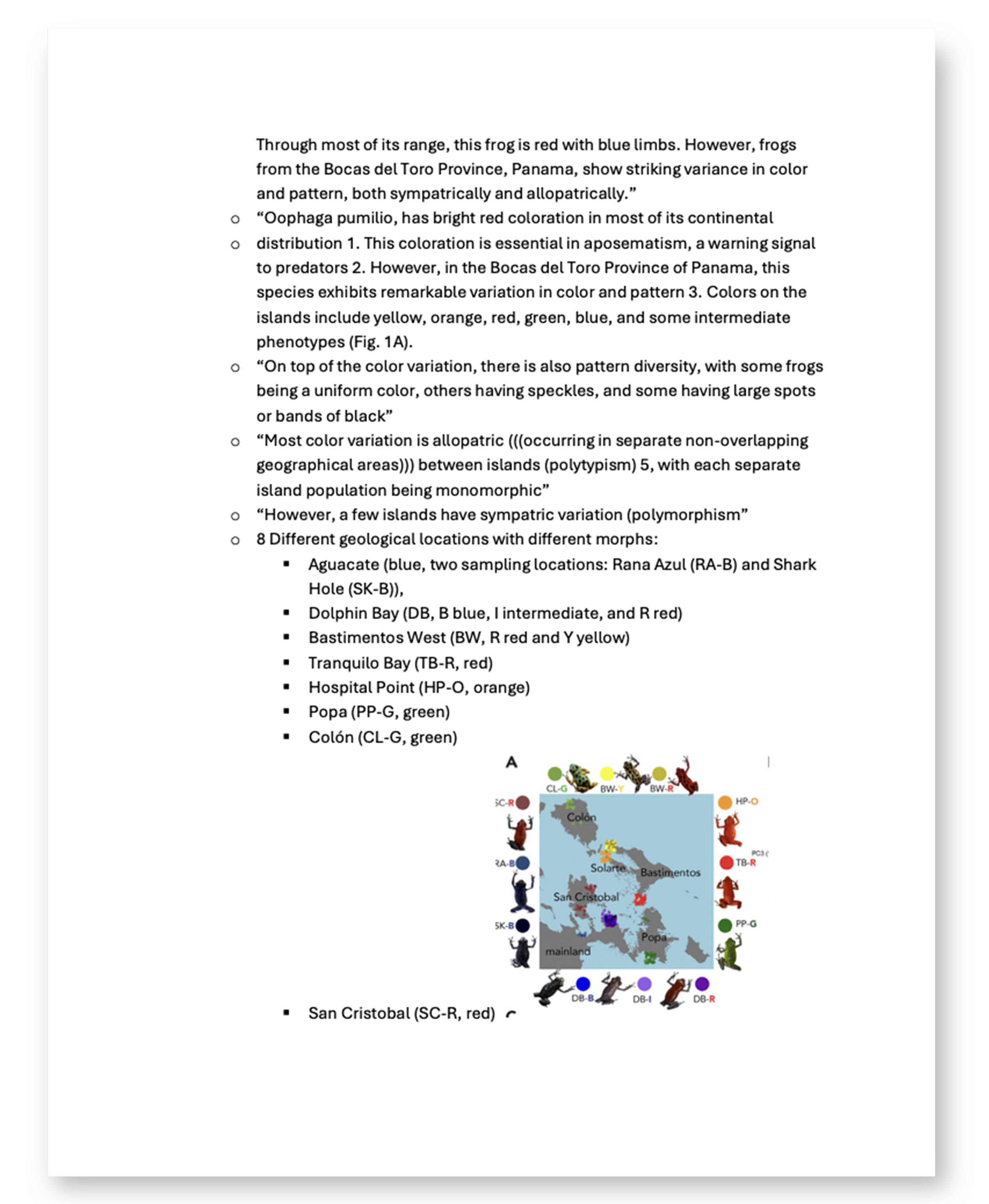
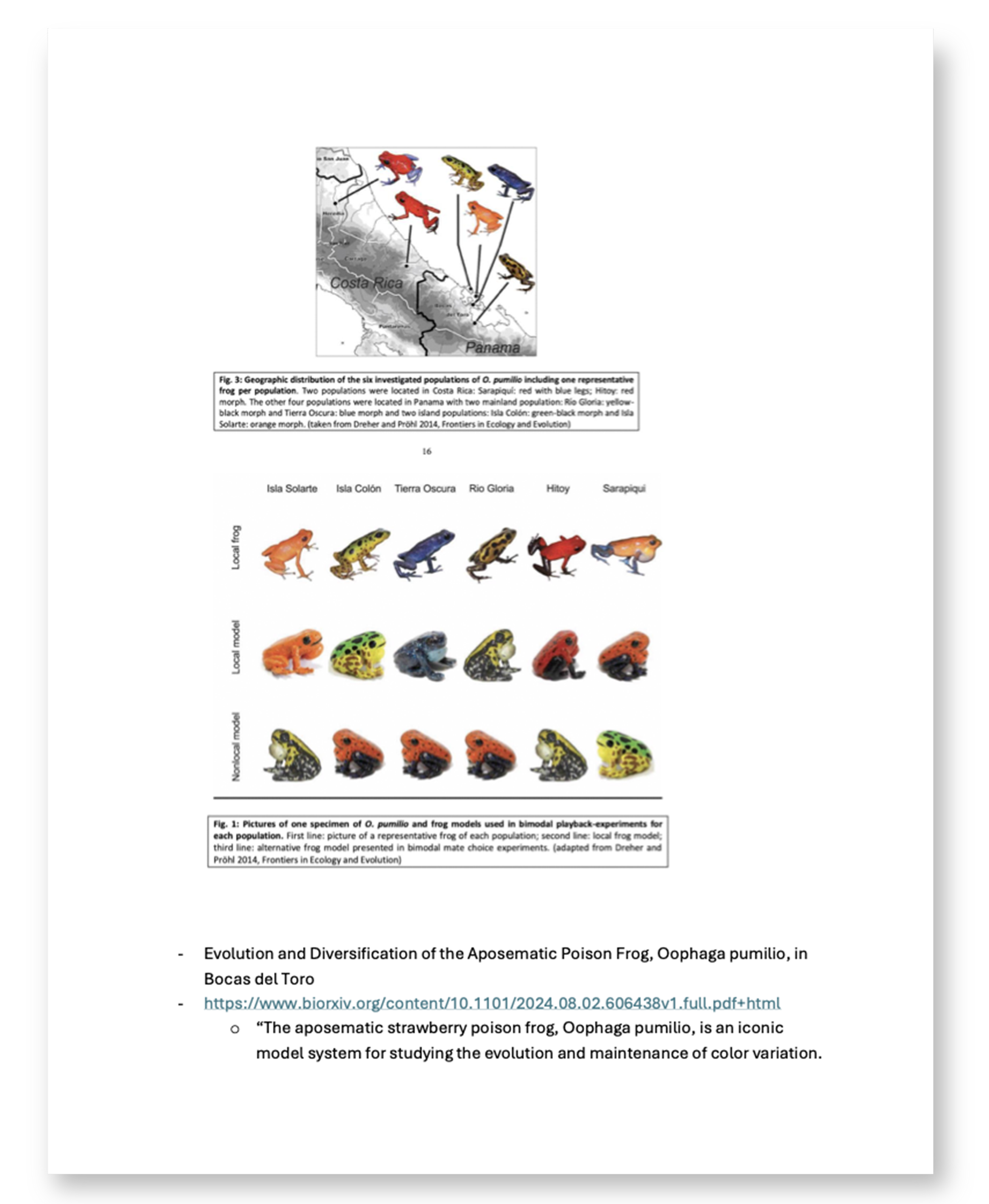
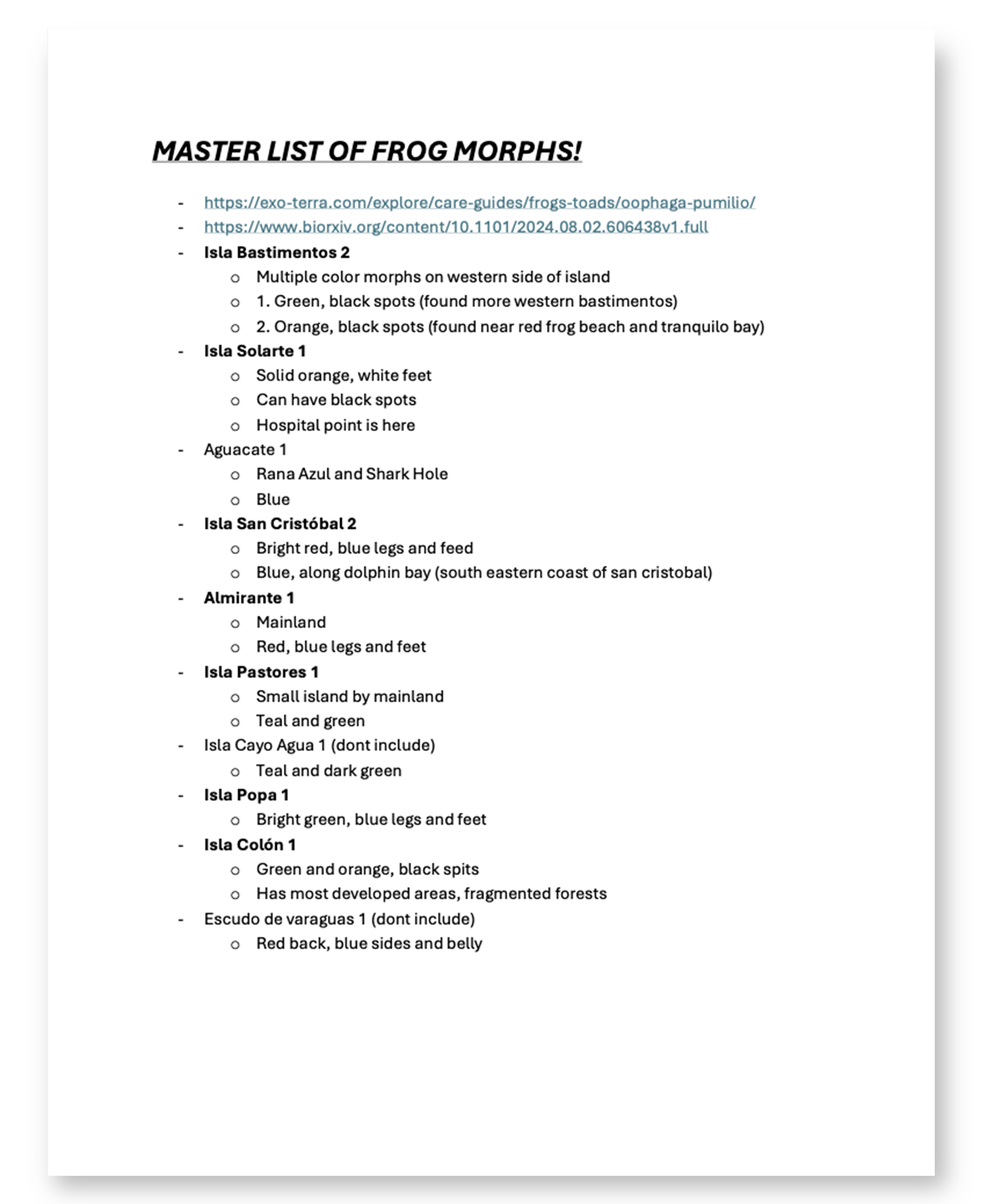
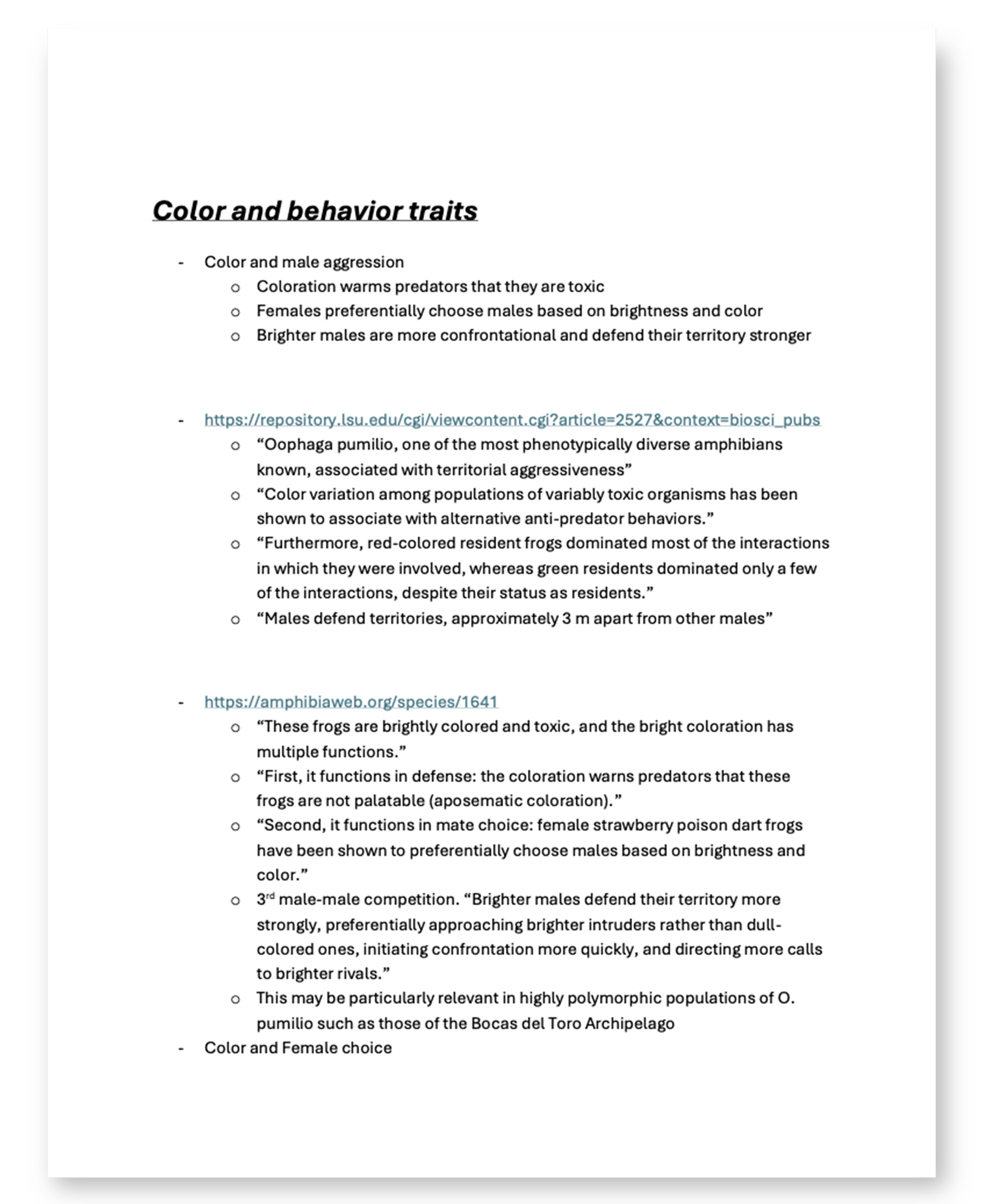
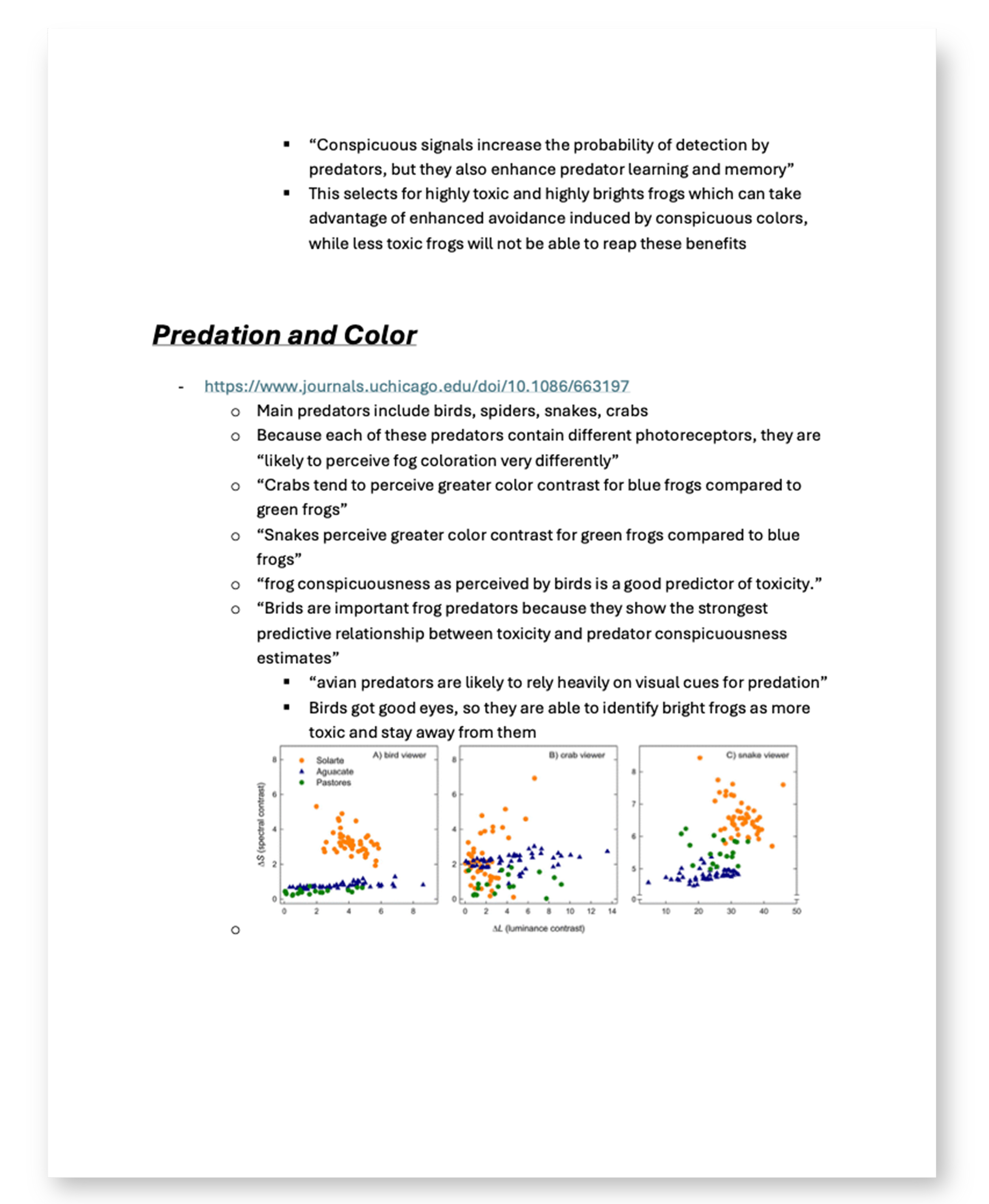
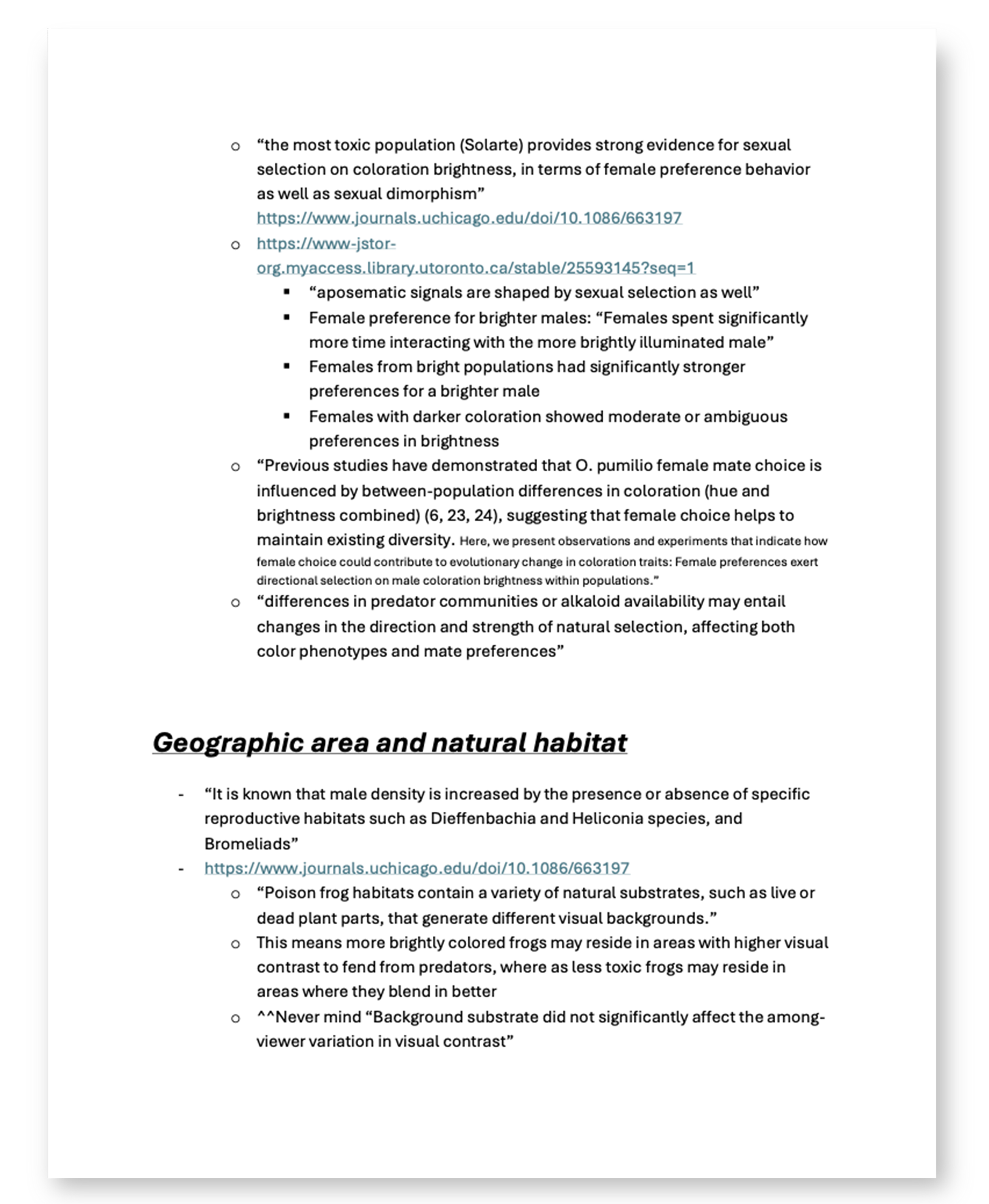
During my time studying in Bocas del Toro, Panama I learned about the unique poison dart frog, Oophaga pumilio. This species inhabits many different islands and has developed distinct color morphs. After conducting further research, I discovered how toxicity, predation, territorial behavior, and mating behavior differs between the color morphs. Although the color morphs are still the same species, it is predicted this unique occurrence will eventually lead to speciation.

AmphibiaWeb. (n.d.). Oophaga pumilio. AmphibiaWeb. https://amphibiaweb.org/species/1641/
Batista, A., & Köhler, G. (2008). Variation in Oophaga pumilio (Amphibia: Anura: Dendrobatidae) in western Panama. Salamandra, 44(4), 225–234. https://www.researchgate.net/publication/291150316_Variation_in_Oophaga_pumilio_Amphibia_Anura_Dendrobatidae_in_western_Panama
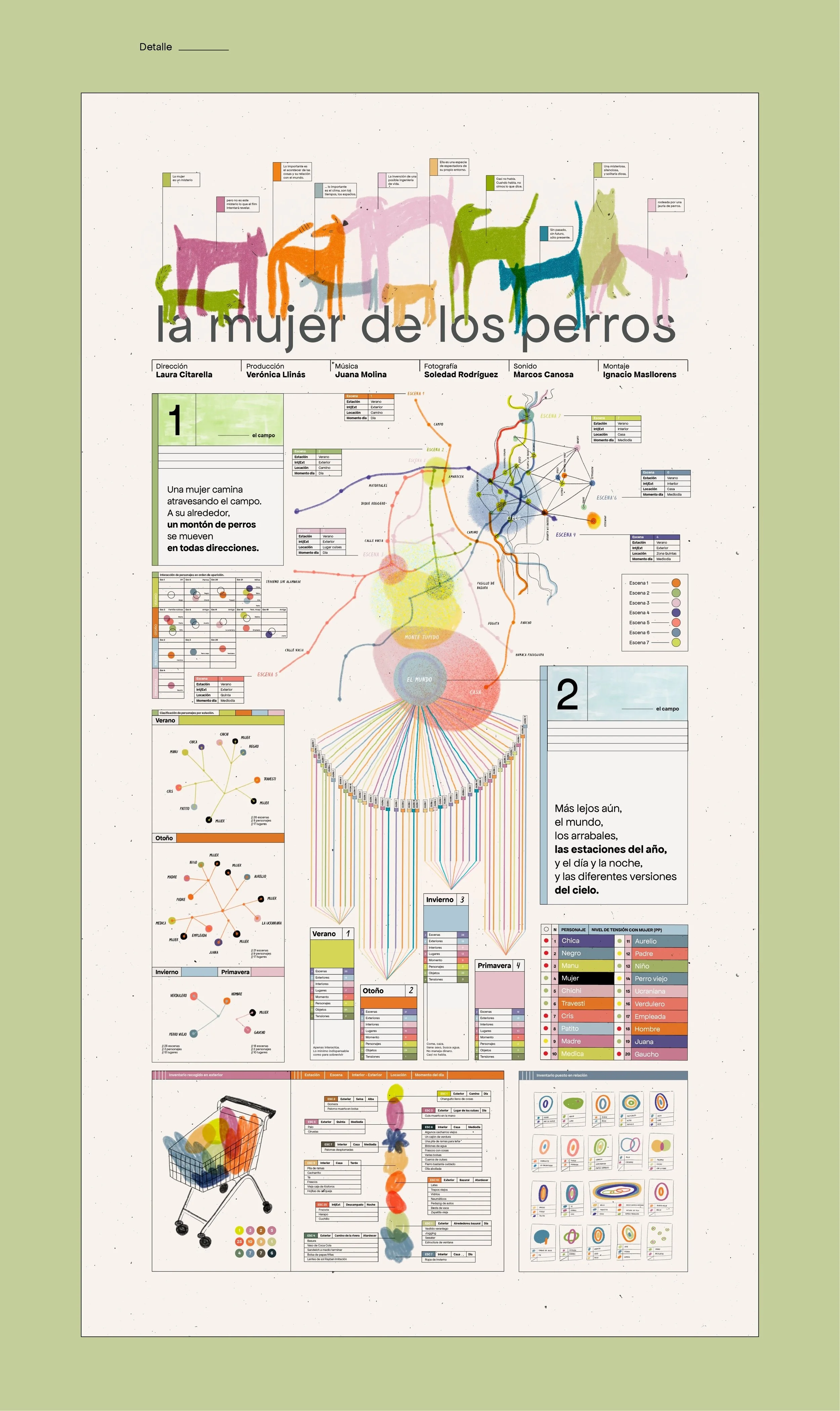
Dibujito, Pilar. “Spotlight: Visualization of Dog Lady (La Mujer de Los Perros), Nightingale.” SPOTLIGHT: Visualization of Dog Lady (La Mujer de Los Perros), 13 Apr. 2022, nightingaledvs.com/spotlight-visualization-of-dog-lady-la-mujer-de-los-perros/.
Dreher, C. E. (2017). The impact of sexual and natural selection on signal divergence in a polytypic poison dart frog (Oophaga pumilio, Dendrobatidae) (Doctoral dissertation). Gottfried Wilhelm Leibniz Universität Hannover.
Dreher, C. E., Rodríguez, A., Cummings, M. E., & Pröhl, H. (2017). Mating status correlates with dorsal brightness in some but not all poison frog populations.
Ecology and evolution, 7(24), 10503–10512. https://doi.org/10.1002/ece3.3531
Exo Terra. (n.d.). Oophaga pumilio. Exo Terra. https://exo-terra.com/explore/care-guides/frogs-toads/oophaga-pumilio/
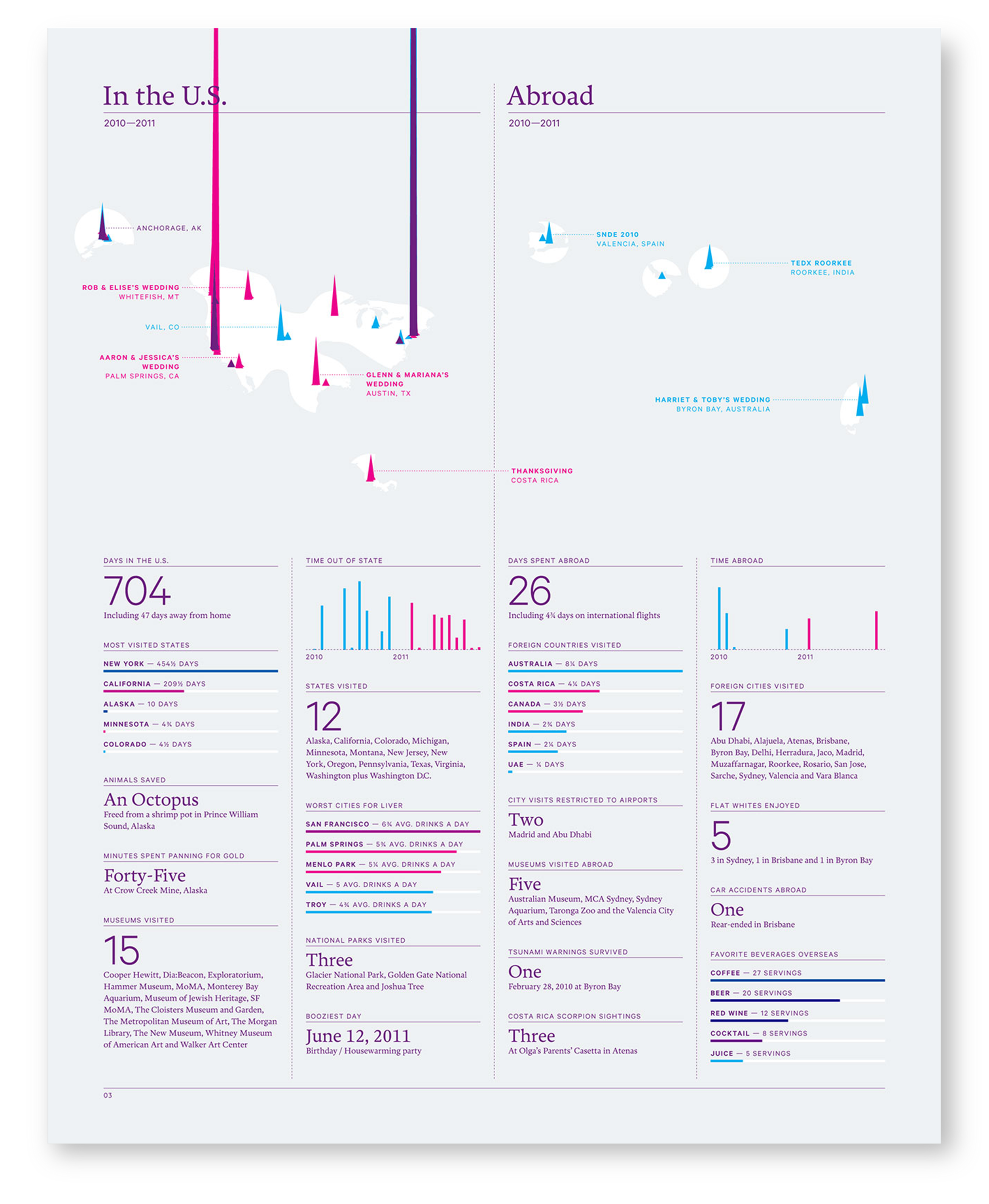
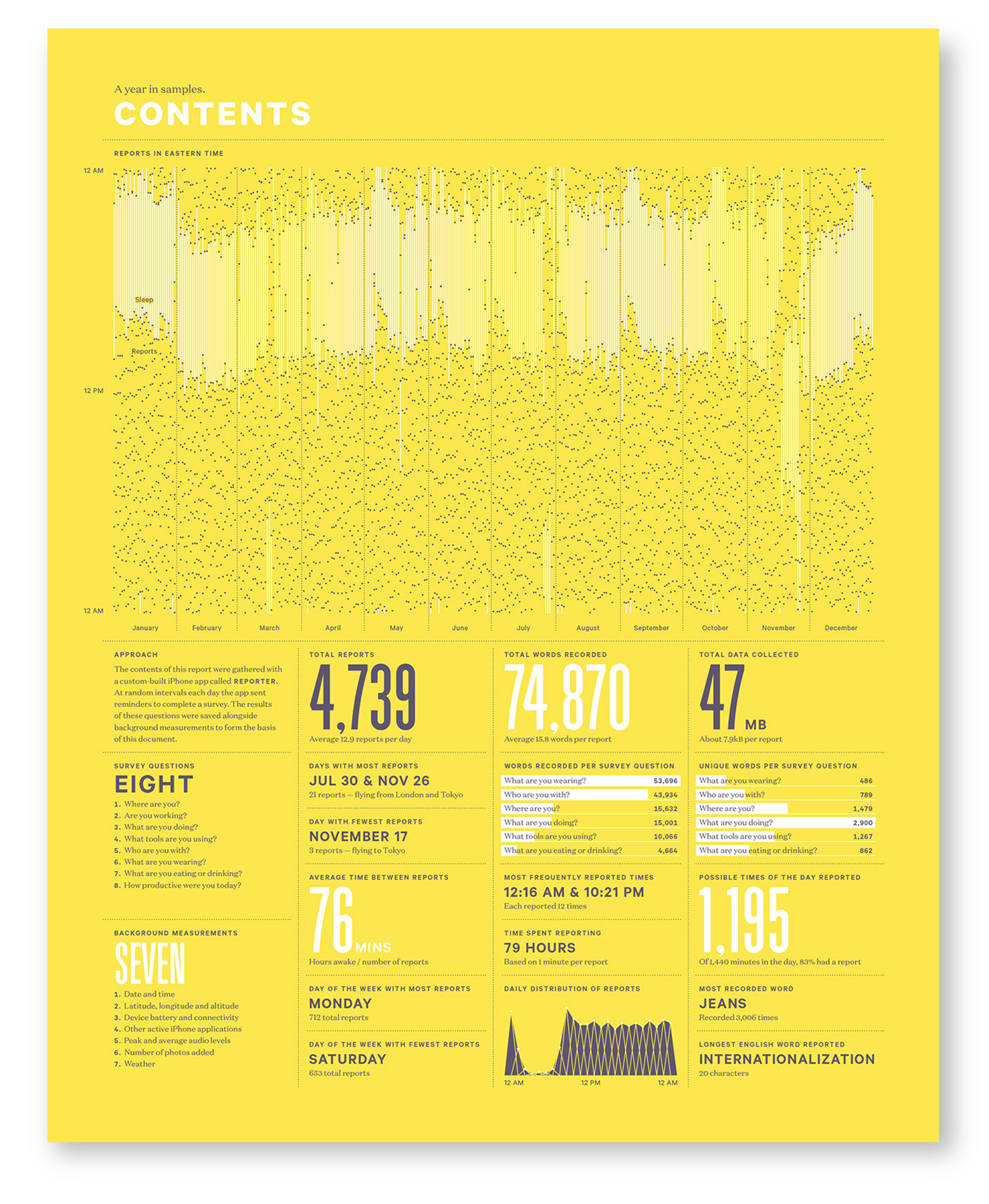
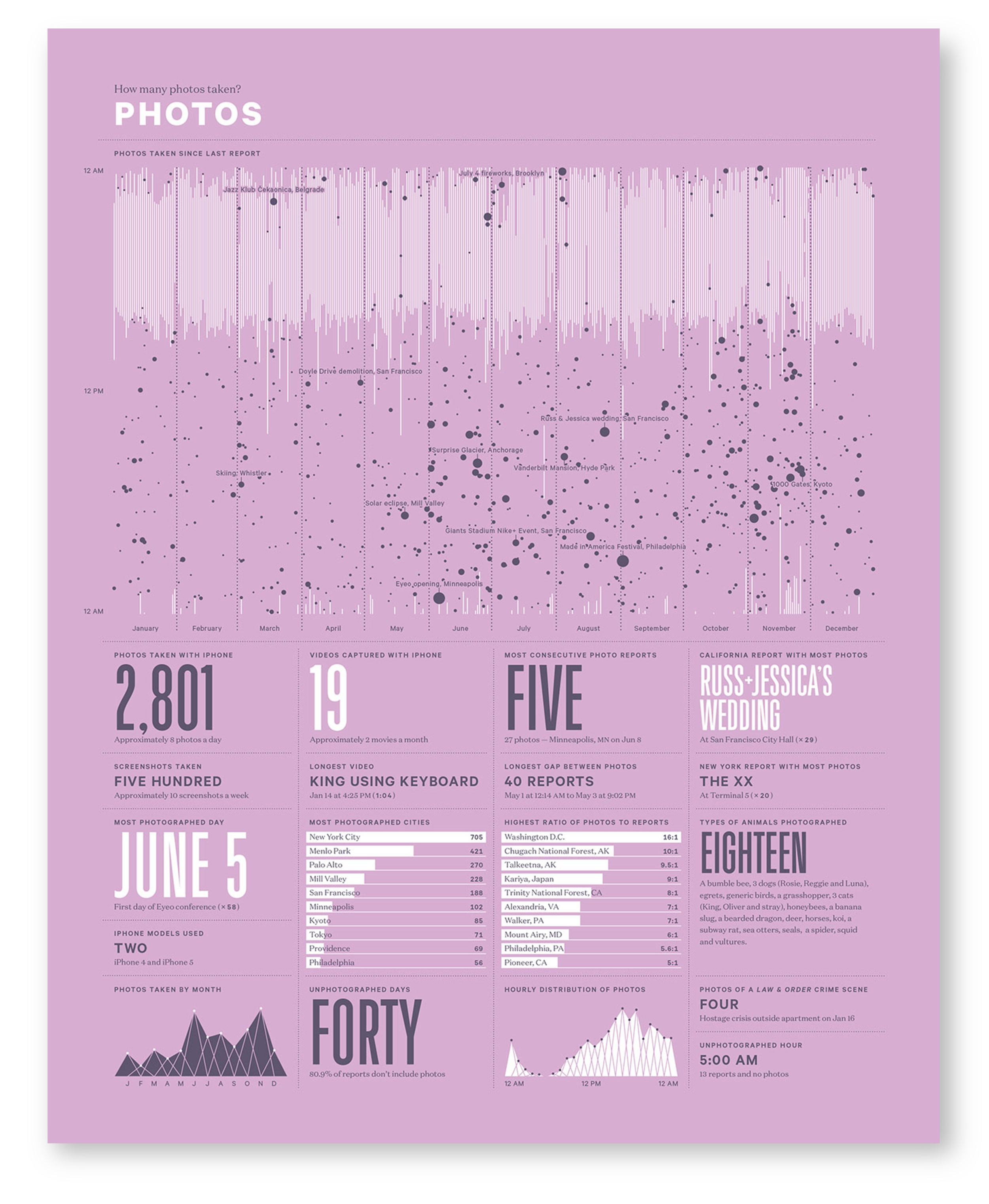
Felton, Nicholas. Feltron, feltron.com/FAR07.html. Accessed 10 June 2026.
Galeano, S., & Harms, K. (2016). Coloration in the polymorphic frog Oophaga pumilio associates with level of aggressiveness in intraspecific and interspecific behavioral interactions. Behavioral Ecology and Sociobiology, 70 (1), 83-97. https://doi.org/10.1007/s00265-015-2027-5
Global Forest Watch. (n.d.). Land cover – Panama country dashboard. Global Forest Watch. https://www.globalforestwatch.org/dashboards/country/PAN/1/?category=land-cover
Maan, M. E., & Cummings, M. E. (2012). Poison frog colors are honest signals of toxicity, particularly for bird predators. The American Naturalist, 179(1), E1–E14. https://doi.org/10.1086/663197
Maan, M. E., & Cummings, M. E. (2009). Sexual Dimorphism and Directional Sexual Selection on Aposematic Signals in a Poison Frog. Proceedings of the National Academy of Sciences of the United States of America, 106(45), 19072–19077. http://www.jstor.org/stable/25593145
Prates, I., Paz, A., Brown, J. L., & Carnaval, A. C. (2024). Evolution and diversification of the aposematic poison frog, Oophaga pumilio; in Bocas del Toro (preprint) bioRxiv. https://doi.org/10.1101/2024.08.02.606438v1
“Work Archive.” Carl De Torres, www.cdgd.com/. Accessed 10 June 2026.
1b. Design Inspirations
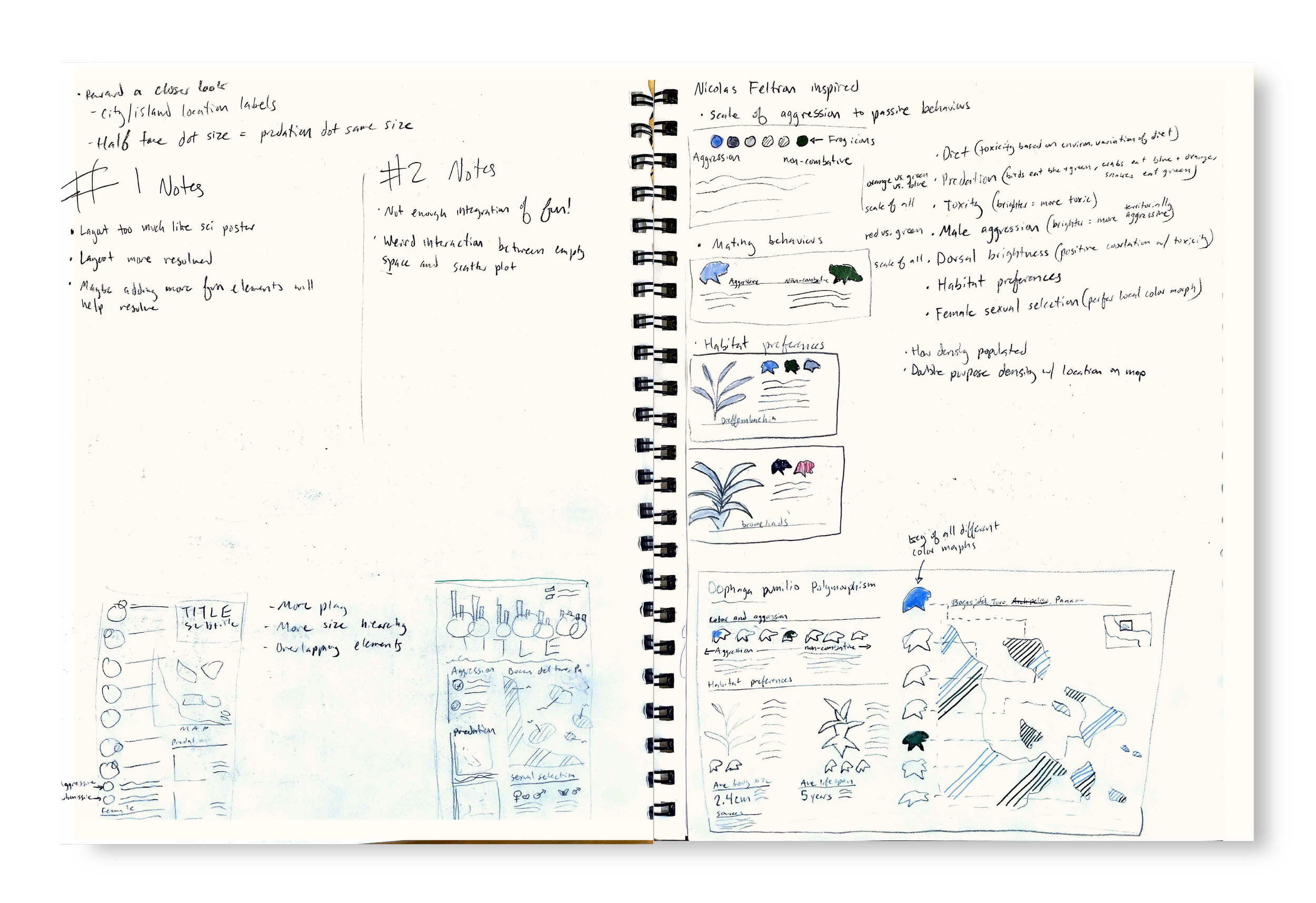
1c. Sketching
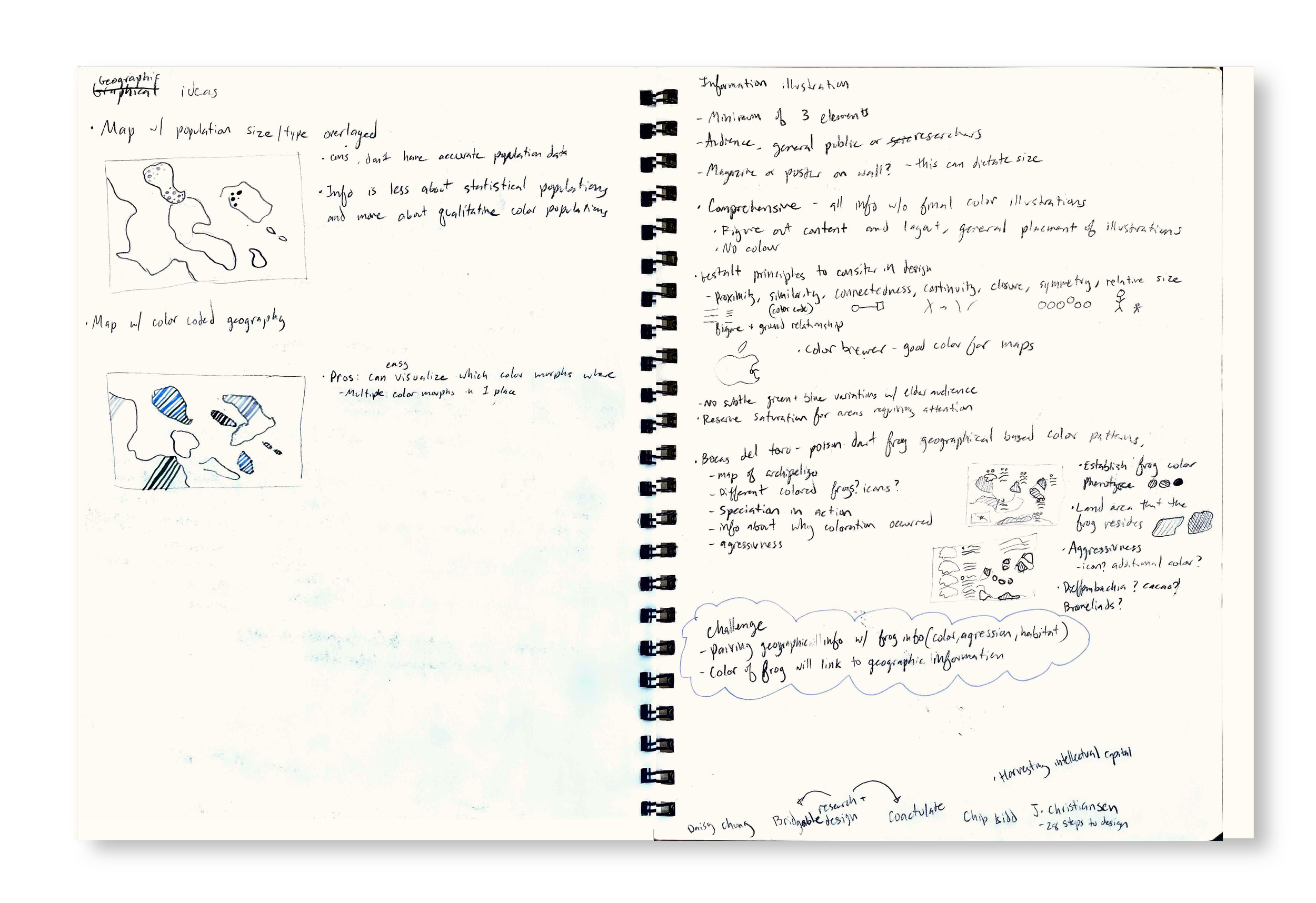
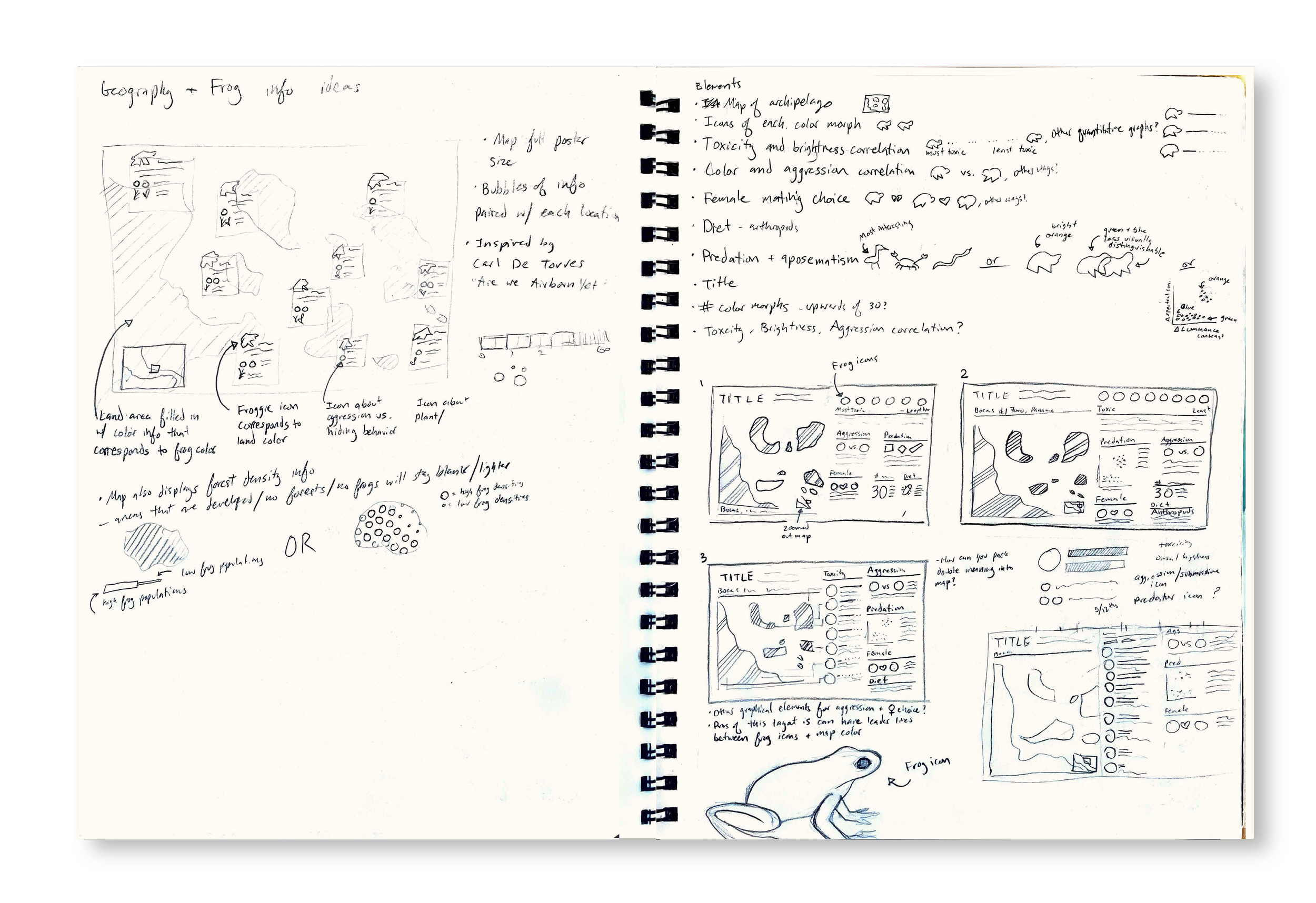
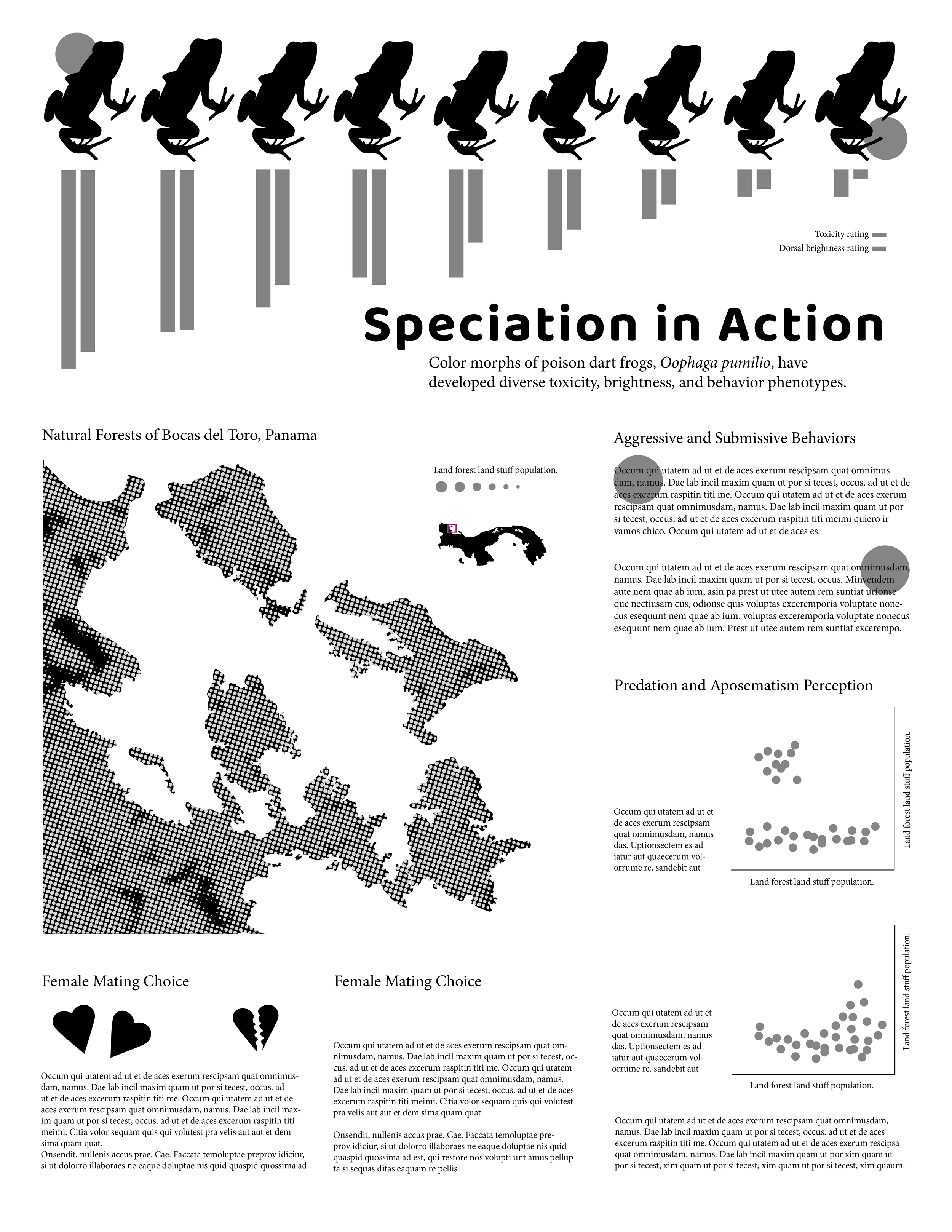
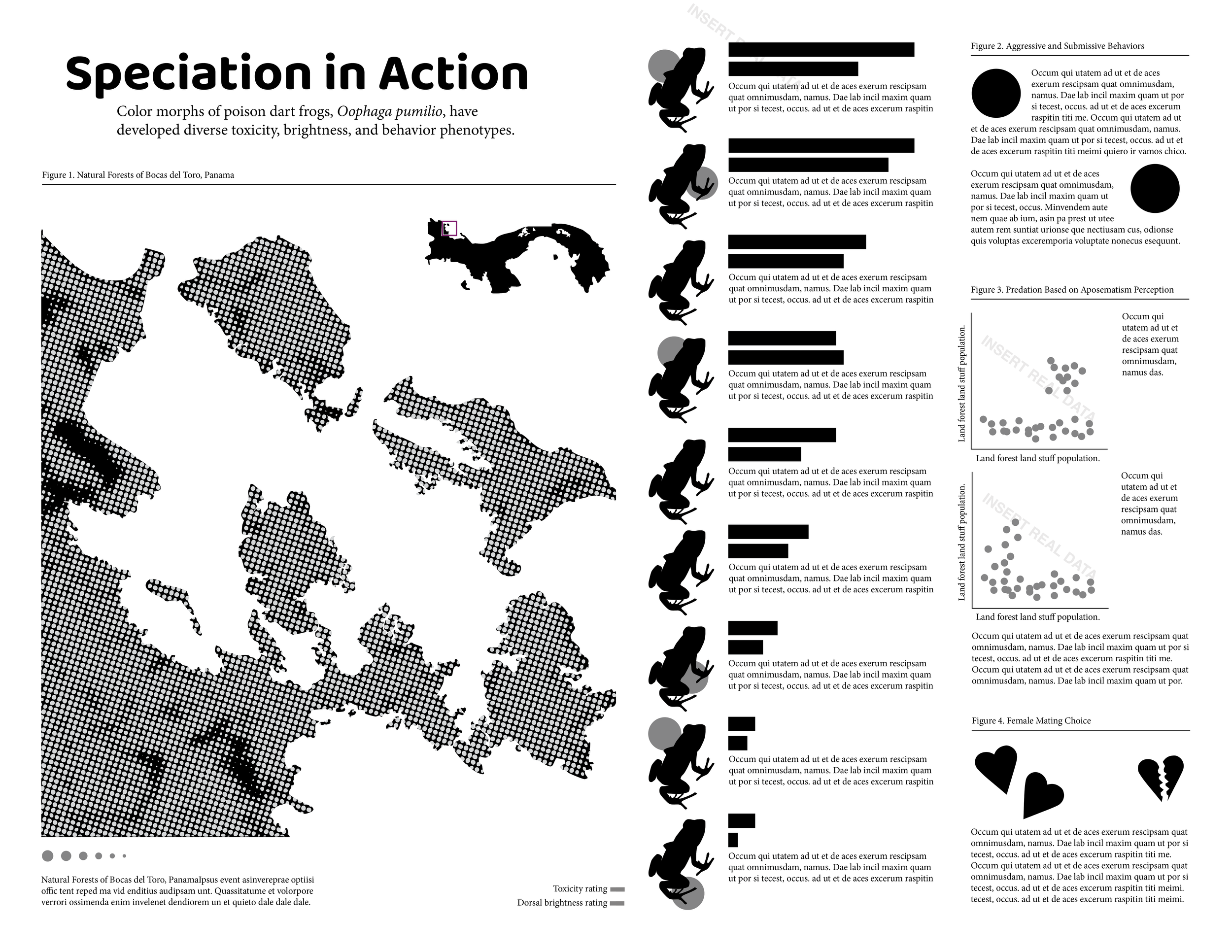
Using Adobe InDesign to design the layout, I aimed to balance informational type with graphic elements to enhance learning and knowledge retention.
2. Production